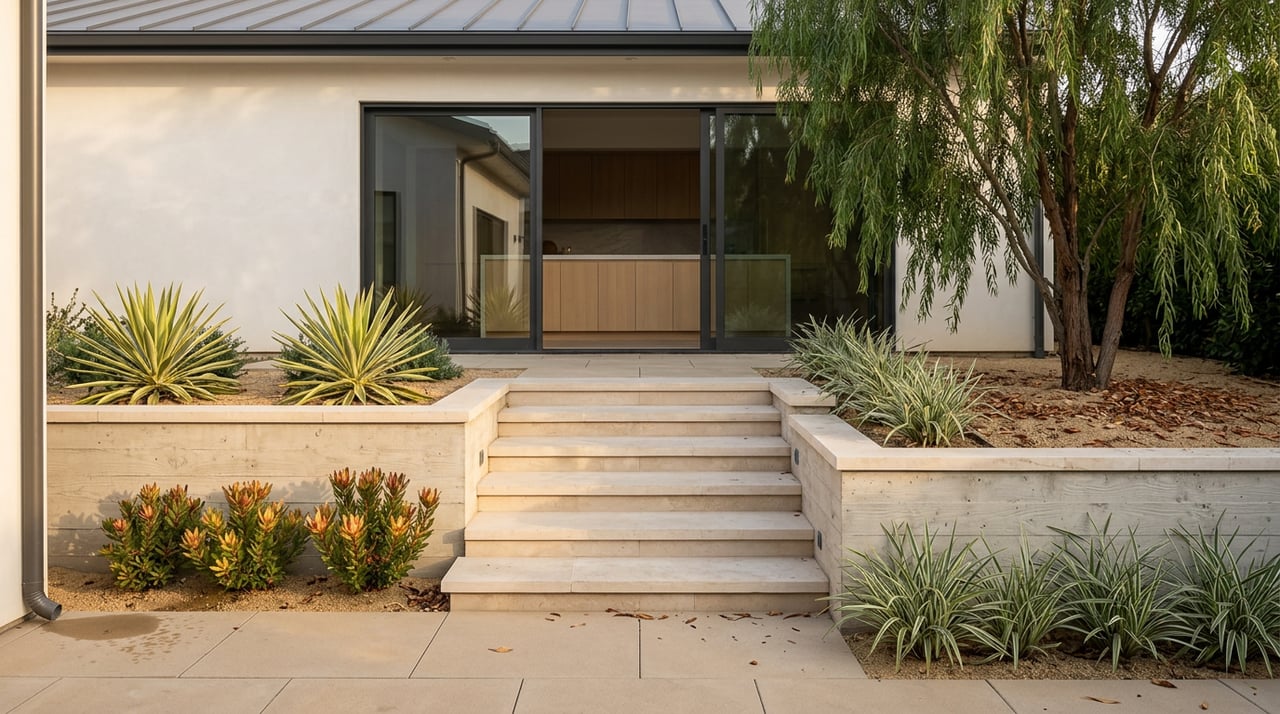
How Coastal-Zone Boundaries Can Affect a Corona del Mar Remodel Timeline
August 20, 2026
August 20, 2026
Ask two Corona del Mar owners how long their addition took to permit and the answers can differ by more than a year, even when the projects look nearly identical on paper. Same square footage. Same contractor tier. Same finish level. The gap rarely comes down to design complexity. It comes down to where the lot sits relative to the beach, the harbor, and the bluff.
That distinction is easy to miss because most people assume permitting friction scales with the size of the project. A bigger addition means a longer process, a smaller one means a shorter process, and interior work is basically free. In Corona del Mar, that assumption breaks down. The variable that actually controls your timeline is a boundary line most buyers never see until their architect or a title company brings it up.
Corona del Mar sits inside California's Coastal Zone, and the City of Newport Beach's certified Local Coastal Program governs most development there. Since the city's Local Coastal Program took effect on January 30, 2017, Newport Beach has been able to issue Coastal Development Permits directly for most projects instead of routing them through the California Coastal Commission's South Coast District office in Long Beach. Roughly 47 percent of the city's total land area falls inside this coastal zone, and a large share of Corona del Mar's residential blocks are part of that footprint.
Here is the part that surprises people. Not every project inside the zone needs a Coastal Development Permit. In 2017, the Coastal Commission approved a Categorical Exclusion Order for Newport Beach, later amended in 2018, that lets the demolition and reconstruction of single-family homes and duplexes skip the CDP entirely, provided the lot does not abut a beach, Newport Harbor, Upper Newport Bay, or a coastal bluff, and provided the new structure stays within a lot coverage cap of twice the buildable area.
That means two lots three streets apart, both technically inside the Coastal Zone, can face entirely different review paths. One sits far enough from the water and the bluff edge to qualify for the exclusion. The other does not.
Layer on top of the coastal boundary a second set of rules that governs specific blocks within Corona del Mar. The city's PC-29 planned community text sets its own setback, height, and lot coverage standards for Corona del Mar Homes, and those standards can differ from the citywide baseline depending on which block a parcel sits on.
The practical effect is that a homeowner cannot look up a single citywide rule and know what their project needs. The honest answer is parcel specific. It depends on the exact lot, its distance from the bluff or shoreline, and which planned community text applies to that block.
Once you know whether a project needs a Coastal Development Permit, the next question is how long the process actually takes. Local design-build professionals working in Corona del Mar describe a wide range depending on scope:
Project type | Typical timeline |
|---|---|
Interior-only remodel, no floor area added | A few months |
Structural addition or whole-house remodel | Several months to about a year |
Teardown and custom new build in the coastal zone | Commonly 12 to 36 months, depending on complexity and appeals |
That last row is the one that catches buyers off guard, especially anyone comparing a Corona del Mar teardown to a similar project inland. The extra time is not architectural. It is regulatory, and most of it comes from a single mechanism: the appeal window.
Even after a project clears the city's planning process and receives local approval, the decision can be appealed to the California Coastal Commission. Buyers who assume a recorded permit means the process is closed sometimes learn otherwise when a neighbor or the Commission itself steps in.
The timeline risk is one thing. The bigger risk for buyers and sellers is what happens when past work in the coastal zone was never permitted correctly in the first place.
Lenders and title insurers increasingly ask for proof that exterior improvements, additions, or bluff-adjacent work were legally permitted before they will fund or insure a transaction. When that proof does not exist, it can mean an escrow holdback, a delayed closing, or a renegotiation while the seller scrambles to document work that happened years earlier under a different owner.
This is exactly why a pre-listing conversation about permit history matters as much as staging or pricing for coastal Corona del Mar properties. Assembling recorded Coastal Development Permits, conditions of approval, and any prior geotechnical or bluff stability studies before a home goes on the market can prevent a clean transaction from stalling in the final weeks.
The regulatory ground under all of this is not static. The Coastal Commission adopted its final Nature-Based Adaptation Strategies Guidance at its March 11, 2026 hearing, a framework that shapes how future bluff and shoreline projects are expected to account for erosion and sea-level rise rather than relying purely on hard armoring like seawalls. Separately, the U.S. Department of Commerce announced on May 20, 2026 that it intends to conduct a full federal review of California's Coastal Management Program, including the Coastal Commission itself, with a public comment period open through NOAA's Office for Coastal Management.
Neither development changes what a Corona del Mar homeowner needs to do this month, but both are reminders that the permitting environment for bluff and shoreline properties is actively being revisited at the state and federal level. Anyone planning a multi-year rebuild should treat the current rules as a starting point, not a fixed target.
Does every remodel in Corona del Mar require a Coastal Development Permit? No. Some single-family teardown and rebuild projects qualify for the city's Categorical Exclusion if the lot does not abut a beach, harbor, bay, or bluff. Confirming which category your parcel falls into is a conversation to have with city planning staff before you budget a timeline.
What if I'm buying a home and I'm not sure past exterior work was permitted? Ask for the recorded Coastal Development Permits, conditions of approval, and any bluff or seawall documentation before removing contingencies. Lenders and title insurers may ask for the same records, and resolving gaps after closing is far harder than resolving them during escrow.
None of this is legal advice, and every parcel's exact requirements should be confirmed directly with the City of Newport Beach Planning Division before you write an offer or break ground. But knowing which questions to ask, and knowing that the answer depends on your specific block rather than a citywide rule, puts you ahead of most buyers walking into a Corona del Mar transaction.
If you're weighing a purchase, a sale, or a remodel on a coastal-zone lot in Corona del Mar, Zach Mickelson can help you get the parcel-specific answers before they become closing-week surprises. Book an appointment to talk through your specific address and what it means for your timeline.
Stay up to date on the latest real estate trends.

The Mickelson Team values the trust clients place in them and strives every day to exceed expectations. Whether you're buying, selling, or planning your next move, the team is here to provide the guidance, strategy, and personalized service you deserve.